Sage Green and Cream Kitchen Color Ideas That Feel Calm, Not Cold
Sage green and cream kitchen color ideas work best as a two tone scheme: sage on the lower cabinets, cream on the uppers, with warm brass hardware and a cream backsplash. Use a tested paint code such as Sherwin-Williams Evergreen Fog SW 9130 with Alabaster SW 7008, and check the swatch in your own light before you commit.
A sage green and cream kitchen is one of the calmest pairings in home design right now. Sage brings a soft, earthy green note, and cream keeps the room light without the stark edge of pure white. Together they suit shaker cabinets, cottage kitchens, and clean modern kitchens, in large open kitchens and small galley kitchens alike.
The catch is that sage is a chameleon. The same paint can read gray in one kitchen and olive in another, and a cream with the wrong undertone can turn yellow. This guide gives you tested paint codes, light rules, a small kitchen version, and real costs.
Start With the Two Tone Rule
Most sage and cream kitchens that look good follow one rule: put the stronger color low and the lighter color high. Sage grounds the room at floor level, cream lifts it at eye level. Break that rule only on purpose, never by accident.
1. Sage lowers, cream uppers: the classic split
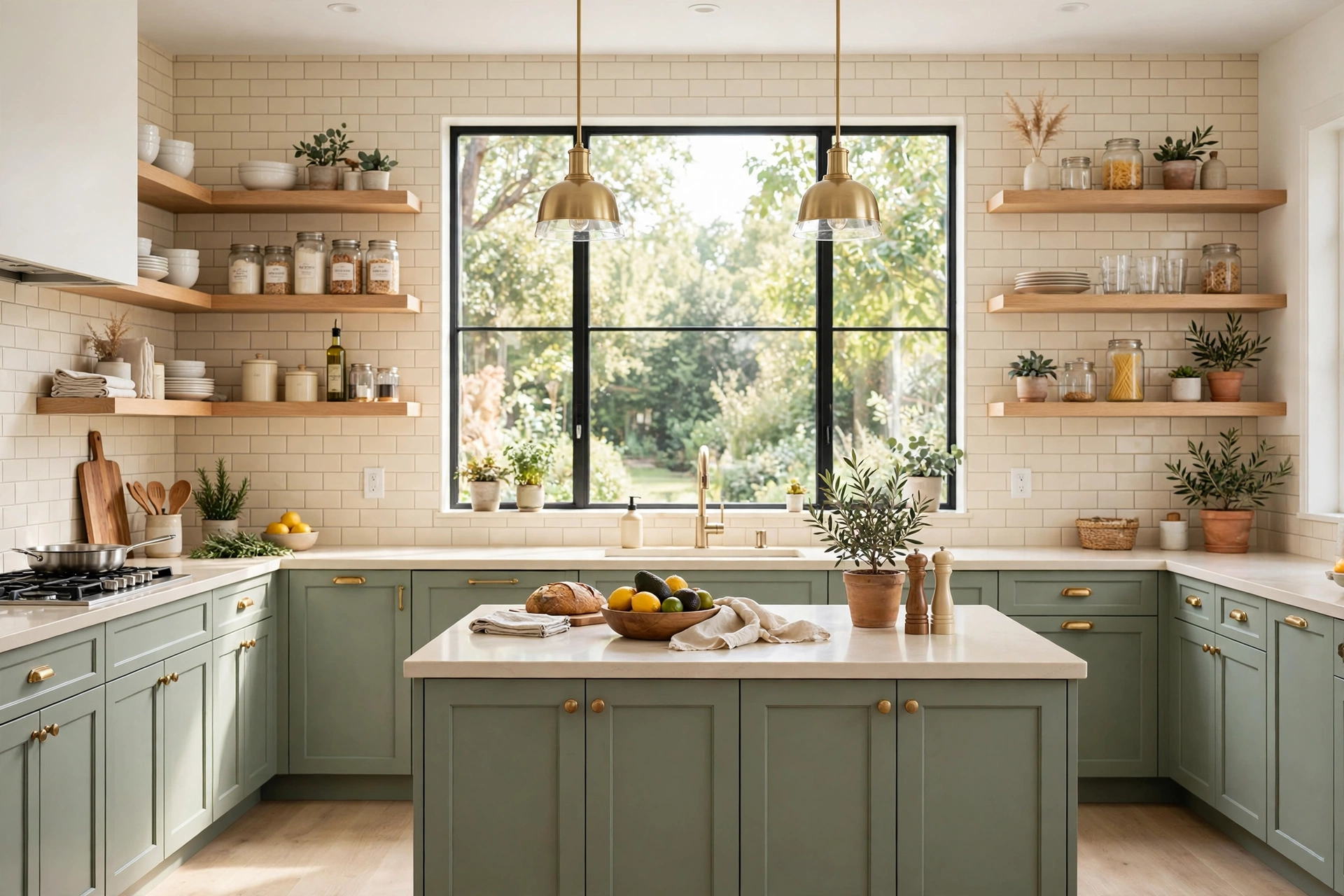
This is the pairing most people picture. Paint the base cabinets sage and the wall cabinets cream, then repeat the cream on the backsplash. The room reads as one calm scheme, and cream uppers keep a small kitchen from feeling top heavy.
2. Cream perimeter, sage island
If painting every lower cabinet feels like too much, paint only the island sage and keep the rest cream. The island becomes the focal point, and the sage reads as a deliberate accent. This is the lowest risk way to test it.
3. Sage walls, cream cabinets
Flip the formula and the room feels wrapped rather than grounded. Sage on the walls with cream cabinets works well in bright kitchens, because the cream doors bounce light back. Use a satin finish on the walls so splashes wipe off.
4. All cream cabinets with a sage pantry wall
A tall pantry wall in sage gives you the color without touching the main cooking run. Cream shelving on that wall breaks up the green and gives everyday dishes a place to live. One wall is easy to repaint, so this suits renters.
Paint Codes That Actually Work
Rivals name paint codes, but none tell you which cream goes with which sage, or which light each pair suits. Every code below is a real manufacturer color, and the pairings keep the undertones on the same warm side.
| Sage paint | Code | Cream partner | Best light |
|---|---|---|---|
| Sherwin-Williams Evergreen Fog | SW 9130 | Alabaster SW 7008 | North, east |
| Sherwin-Williams Clary Sage | SW 6178 | Creamy SW 7012 | South, west |
| Benjamin Moore Healing Aloe | 2037-40 | White Dove OC-17 | North, east |
| Benjamin Moore October Mist | 1495 | Cloud White OC-130 | Bright, south |
| Behr Sage Green | N510-4 | Behr Swiss Coffee | Any light |
5. Evergreen Fog with Alabaster, the safe classic
Evergreen Fog SW 9130 is a soft mid tone sage with a gray side, and Alabaster SW 7008 is a warm cream that never reads stark. Evergreen Fog has a light reflectance value of 35, so it holds its color in dim light, while Alabaster at 82 bounces light back. Together they are the most forgiving pair here.
6. Healing Aloe with White Dove, the softest pair
Benjamin Moore Healing Aloe 2037-40 is paler and cooler than Evergreen Fog, and White Dove OC-17 is a warm white that reads as cream next to it. This pair suits bright kitchens, because neither color fights the sun. It also suits slab doors, where the pale green reads as a tint.
7. Clary Sage with Creamy, the fresh garden pair
Clary Sage SW 6178 is a clearer, more garden fresh sage, and Creamy SW 7012 warms it up from the other side. Use this pair in a south facing kitchen, where strong sun can wash out a pale sage. The extra color survives bright light, and the cream keeps it from feeling like a greenhouse.
8. October Mist with Cloud White, the pale modern pair
October Mist 1495 is Benjamin Moore’s palest sage, almost a whisper of green, and Cloud White OC-130 is a soft warm cream. This is the pair for a modern kitchen with flat front doors and large stone surfaces. Test it on a large board first, because pale sage can disappear in a dim room.
Match the Pairing to Your Light
Light direction changes sage more than any other kitchen color. A swatch that looks perfect in the paint store can turn gray by four in the afternoon. Choose for the light you actually have.
9. North facing kitchens: warm the sage, lighten the cream
North facing rooms get cool, slightly blue light all day, and a gray sage turns muddy in it. Choose a warm sage such as Evergreen Fog or Healing Aloe, pair it with a warm cream such as Alabaster, and avoid any sage with a blue undertone. Paint a test patch on the wall you face while cooking, and check it at four in the afternoon.
10. South facing kitchens: cooler sage works here
South facing kitchens get warm, direct sun, so you can use a cooler or deeper sage without the room feeling cold. Clary Sage and October Mist both work well here. Keep the cream warm, because a cool white next to sage reads as hospital white in strong sun.
11. Windowless or low light kitchens: let the numbers guide you
A kitchen with no window or one small window needs a pale sage, a high reflectance cream, and a lighting plan. Choose a sage with a light reflectance value above 40, keep the uppers cream, and add under cabinet lighting in warm white at 2700K to 3000K. Cool daylight bulbs make sage look gray, while warm bulbs bring the green back.
The Small Kitchen Version
A small kitchen does not need fewer colors, it needs the color in the right places. Keep the upper half light, and let one sage element do the work.
12. Lowers only, cream everywhere else
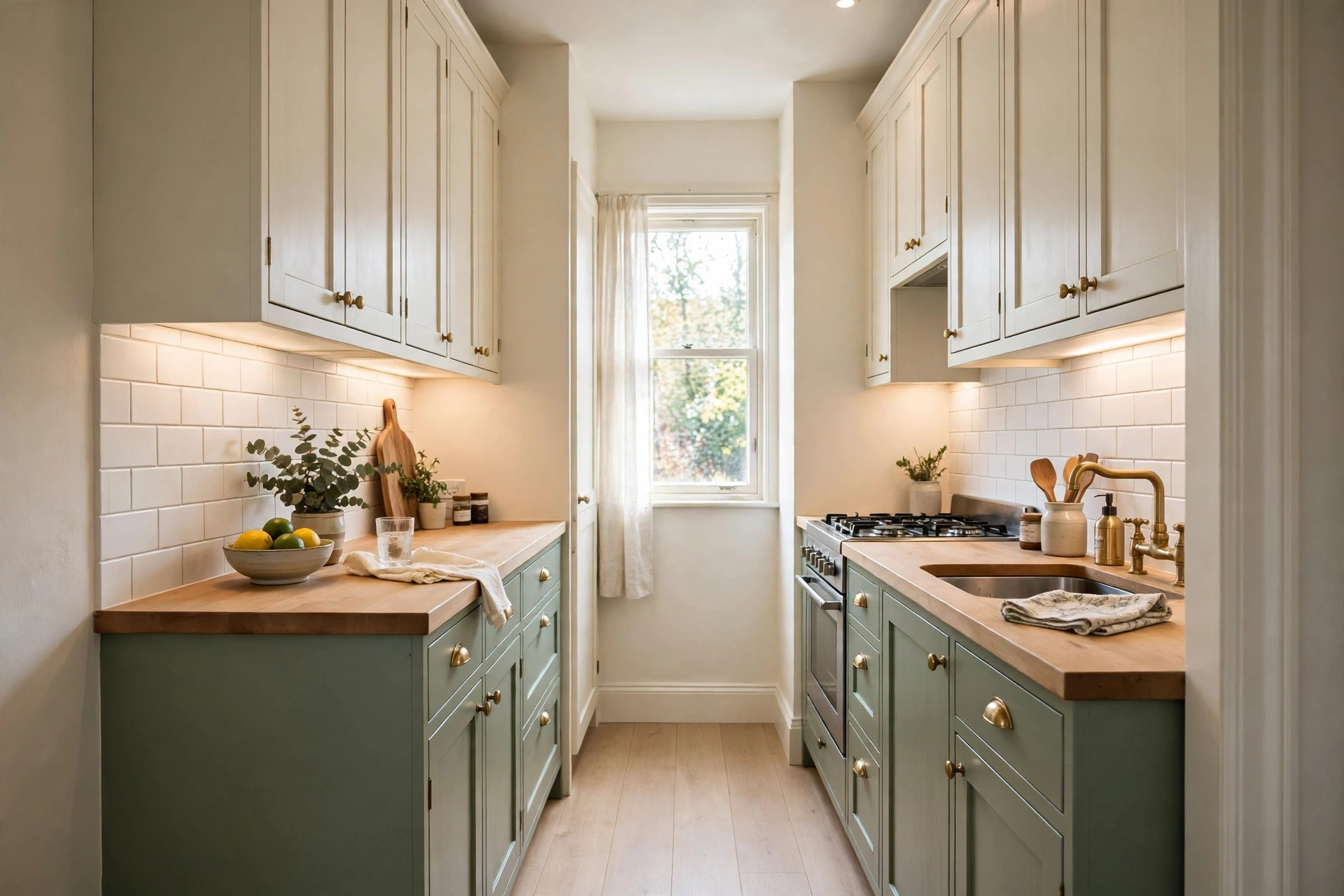
In a galley or a kitchen under 100 square feet, paint only the base cabinets sage and keep the wall cabinets, walls, ceiling, and backsplash cream. The sage reads as a baseboard of color, and the scheme costs one gallon of cabinet paint.
13. Island only, the one gallon test
A small kitchen with a peninsula or a rolling island can carry the whole color story on that one piece. Paint the island sage, keep everything else cream, and add two sage bar stools if you want more green. Repainting one island is a weekend job.
14. Sage backsplash tile, cream cabinets
If painting cabinets feels like too much, bring the sage in as tile. A sage subway tile backsplash with warm cream grout gives you the color at eye level, and cream cabinets keep the room light. Peel and stick sage tile comes off when the lease ends.
Surfaces, Hardware and Finishing Touches
Paint is only half the pairing. The countertop, the backsplash, the hardware, and the floor decide whether the scheme looks collected or accidental.
15. Brass hardware, one finish everywhere
Brushed brass is the natural metal for sage and cream, because its warmth ties the green and the cream together. Use one finish on every knob, pull, faucet, and light fixture, and keep the pulls the same length on every drawer. Mixed metals make a quiet palette look busy.
16. Countertops: cream quartz or butcher block
Cream quartz with soft warm veining is the easiest countertop for this pairing, because its pale base keeps the sage looking soft. Butcher block is the warmer option, and it works best on the island. Avoid dark granite or black counters, which compete with the sage.
17. Backsplash: cream subway tile with warm grout
Cream subway tile is the dependable backsplash for sage cabinets, because its familiar shape keeps the room classic. Match the grout closely to the tile for a soft wall, or use a warm gray grout for more definition. Avoid bright white grout, which draws a grid over the wall.
18. Flooring: light wood ties it together
Light oak or pale ash flooring is the best base for sage and cream, because it adds warmth without adding another color. If you already have dark floors, lighten the scheme elsewhere: use a paler sage, keep the uppers cream, and add a light rug in the walkway.
What a Paint Only Refresh Costs
Every price below was checked on 22 Nov 2026 from manufacturer, dealer, and retailer listings. Prices are per gallon in US dollars, before tax, and they move with sales.
| Paint | Price per gallon | Best for |
|---|---|---|
| Behr Premium Plus interior | $40.98 | Budget walls |
| Benjamin Moore Advance | $62.44 | Cabinets |
| Benjamin Moore Regal Select | $74.99 list | Walls |
| Sherwin-Williams Emerald Interior | $99 | Walls |
| Sherwin-Williams Emerald Urethane Trim Enamel | $95 to $110 street, $130.49 to $132.49 list | Cabinets |
A typical kitchen needs about two gallons of cabinet enamel and one gallon of wall paint, at 350 to 400 square feet per gallon. On a budget route, two gallons of Behr Premium Plus for the cabinets plus one gallon for the walls costs about $123. A midrange route with Benjamin Moore Advance on the cabinets and Regal Select on the walls costs about $200. A premium route with Sherwin-Williams Emerald Urethane on the cabinets and Emerald Interior on the walls costs about $290 to $320. Add primer, sandpaper, brushes, rollers, and tape on top, and watch for Sherwin-Williams sales of 30 to 40 percent, which can cut the premium route by about a third.
For the full painting method, from prep and primer to the right finish for cabinet doors, see our guide to kitchen cupboard paint colours UK. For the wider budget picture, our small kitchen remodel cost 10×10 guide breaks down a full small kitchen, and our average cost to paint a 12×12 room guide covers wall painting costs room by room.
Mistakes to Avoid
The most common mistake is painting the sage without a test patch, because sage shifts more than any other kitchen color. Paint a large swatch on the cabinet door you see most often, live with it for three days, and check it in morning light and under your evening bulbs.
The second mistake is mixing creams with different undertones. If the wall cream is pink based and the counter cream is yellow based, the room looks messy even when both colors are pretty alone. Put every cream sample side by side first.
The third mistake is glossy sage cabinets. A high gloss finish makes green look clinical and shows every fingerprint. Use a satin or semi gloss finish on cabinets, which wipes clean without the glare.
Frequently Asked Questions
What is the best sage green paint color for kitchen cabinets?
Sherwin-Williams Evergreen Fog SW 9130 is the safest all round choice, because it holds its color in north facing light and pairs cleanly with Alabaster SW 7008. Benjamin Moore Healing Aloe 2037-40 is the softest option for bright kitchens.
What cream goes with sage green kitchen cabinets?
Use a warm cream, never a stark white. Sherwin-Williams Alabaster SW 7008 goes with Evergreen Fog, Benjamin Moore White Dove OC-17 goes with Healing Aloe, and Creamy SW 7012 goes with Clary Sage.
Should sage green go on upper or lower kitchen cabinets?
Put sage on the lower cabinets and cream on the uppers. The green grounds the room at floor level, the cream keeps the upper half light, and the split works in small kitchens as well as large ones.
Does sage green make a small kitchen look smaller?
Not if you keep the sage low. Paint only the base cabinets sage, keep the wall cabinets, walls, and ceiling cream, and the room stays bright. A dark sage on every cabinet will shrink a small kitchen.
How much does it cost to paint kitchen cabinets sage green and cream?
A paint only refresh costs about $123 on a budget route with Behr Premium Plus, about $200 with Benjamin Moore Advance and Regal Select, or about $290 to $320 with Sherwin-Williams Emerald Urethane and Emerald Interior. Those figures cover two gallons of cabinet enamel and one gallon of wall paint, before primer and supplies.