
Kitchen Cupboard Paint Colours UK Homeowners Love, and How to Paint Them
Paint your kitchen cupboards sage green, deep navy or a warm white for a finish that suits most UK kitchens. Use an eggshell or satin paint made for woodwork, prime melamine and gloss doors first, and allow two thin coats with a full cure of two weeks. A typical UK kitchen costs about £65 to £80 in paint and tools.
Painting your cupboards is the cheapest way to change a whole kitchen. A new kitchen costs thousands of pounds, while a tin of paint and a weekend of work can make tired cupboards look new. Use our paint calculator to work out how much paint you need.
The Shades That Work Best in UK Kitchens
British kitchens have their own light: many are north facing or small, with deep rooms and small windows. The colours that work best cope with cool, grey daylight and still look warm in the evening.
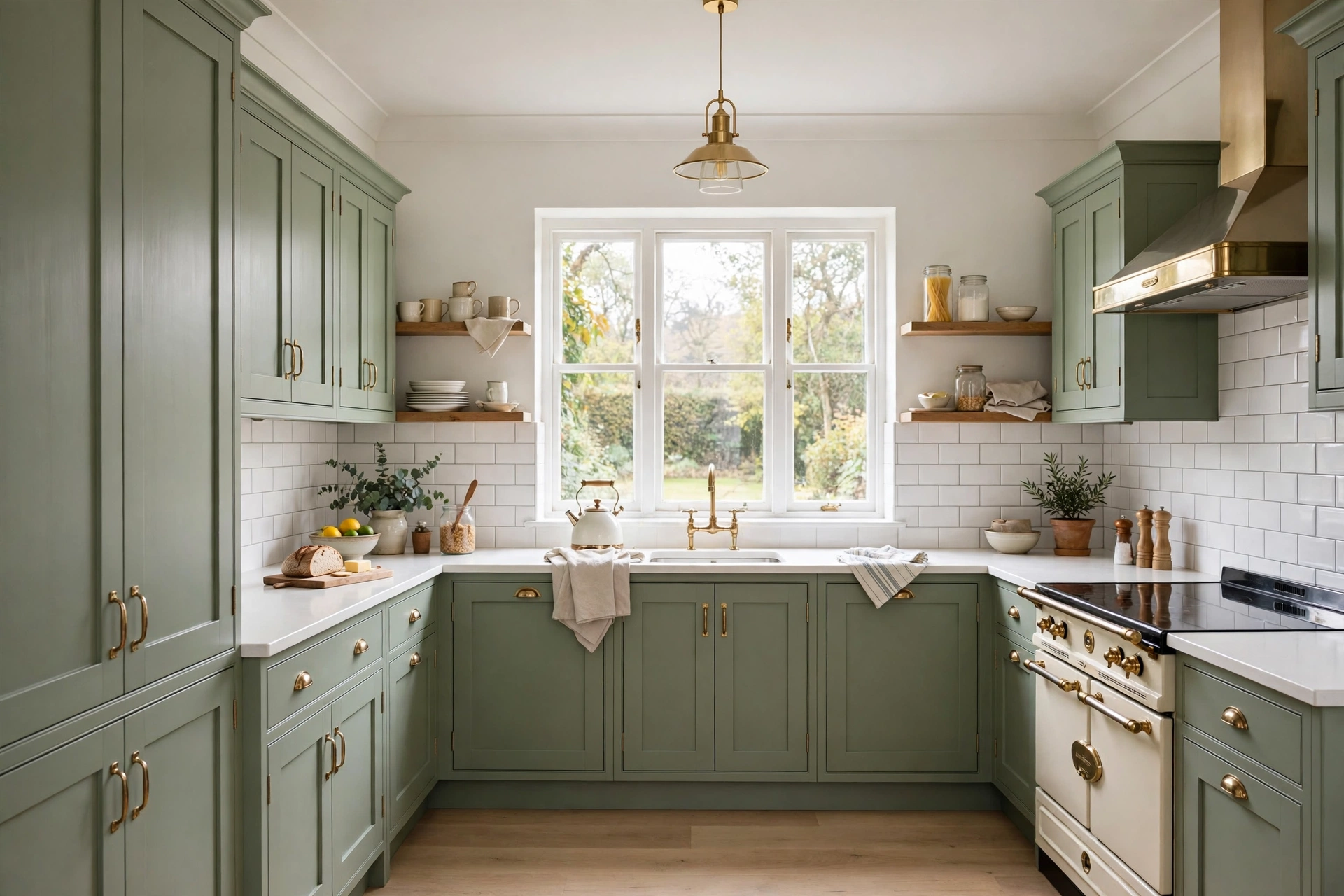
Sage green. The most popular cupboard colour in the UK right now. Sage sits between green and grey, so it feels calm and natural, and it pairs well with oak, brass and white worktops. Farrow and Ball Pigeon No.25 is a soft grey green that works in small kitchens. Frenchic Wise Old Sage is the chalk paint equivalent.
Deep green. For a bolder look, a deep green gives a kitchen real character. Farrow and Ball Studio Green No.93 is a dark, rich green that looks almost black in low light. Frenchic Victory Lane is a racing green with the same confident feel. Deep green suits large kitchens.
Navy and deep blue. Navy cupboards have stayed popular for years because they work with almost everything. Farrow and Ball Hague Blue No.30 is a deep blue with a hint of green, and Stiffkey Blue No.281 is a strong, inky blue. Frenchic After Midnight and Moody Blue sit in the same family.
Warm whites and creams. If you want a light, airy kitchen, choose a warm white rather than a brilliant white. Brilliant white can look cold and clinical under British grey skies. Farrow and Ball Wimborne White No.239 and Pointing No.2003 are warm whites with a soft, creamy feel. Frenchic Cream Dream and Salt of the Earth are the chalk paint versions. Warm white suits a small kitchen or a north facing room best.
Greys, stones and black. Mid grey and stone colours suit modern kitchens and flats, and they hide marks well next to stainless steel. Farrow and Ball Skylight No.205 is a pale grey blue, while Frenchic Smudge is a charcoal grey with a hint of blue. Avoid very pale grey in a dark kitchen. Black cupboards suit large kitchens; Frenchic Blackjack is a true black chalk paint. Keep black to the base units in a small kitchen.
How to Choose a Colour for Your Kitchen
Start with the light. Look at the colour you are considering at midday and again in the evening. North facing kitchens get cool, blue toned light all day, so warm colours work best there: sage, warm white, cream, or a green with yellow in it. South facing kitchens get warm light, so cooler colours like navy and grey green stay balanced.
Next, look at what you cannot change. Your worktop, floor and tiles set the limits. A white quartz worktop suits almost any cupboard colour, while a dark granite worktop needs lighter cupboards. Wooden worktops pair beautifully with sage, cream and navy.
Small kitchens need light colours on the wall units at least. Paint the base units a deep colour and keep the wall units pale. Test before you commit: paint a large piece of card, tape it to a door and live with it for two or three days.
Eggshell vs Satin vs Chalk Paint vs Gloss: Which Finish for Cupboards
The finish matters as much as the colour. Cupboards get touched, splashed and wiped every day, so the paint needs to be tough and washable. Ordinary wall emulsion marks easily and will not survive cleaning, so choose a paint made for woodwork and furniture.
| Finish | Sheen | Durability | Cleaning | Best for |
|---|---|---|---|---|
| Eggshell | Low sheen, soft matt | Very good | Wipes clean, gentle cleaner only | Most cupboards, classic look |
| Satin | Mid sheen, soft shine | Excellent | Easy to wipe, handles grease well | Busy family kitchens, high contact doors |
| Chalk paint | Flat matt | Good, needs sealing on high use doors | Wipe gently, avoid harsh cleaners | Quick DIY refresh, vintage look |
| Gloss | High shine | Excellent | Very easy to wipe clean | Modern kitchens, but shows every mark |
Eggshell is the most popular choice for cupboards in the UK. Farrow and Ball Estate Eggshell is the classic example, giving a soft, low sheen finish that hides small marks. Satin is tougher and easier to wipe, so it suits a busy family kitchen. Rawlins Paints recommends eggshell for cupboards and satin for high contact surfaces.
Chalk paint, such as Frenchic Al Fresco, is the easiest option for a first timer. It is self priming and self sealing on most surfaces, low in VOCs, and it needs little sanding. The finish is flat and matt, which suits a vintage or country look. It is not as hard wearing as eggshell or satin, so seal the doors near the hob and sink.
Gloss is the toughest finish of all and the easiest to clean, but it shows every fingerprint and brush mark. It suits a modern, flat front kitchen where the doors are perfectly smooth.
How to Paint Kitchen Cupboards: The Full DIY Method
This method gives a finish close to a professional job. It takes a weekend for an average UK kitchen, plus drying time. Rushing any step is the main reason painted cupboards peel.
- Remove the doors and drawers. Number every door and its matching carcass with masking tape. Remove the handles and hinges, and keep the screws in labelled bags. Paint the doors flat on trestles, which stops drips.
- Clean and degrease. Kitchen cupboards carry years of cooking grease, even if they look clean. Wash every surface with warm water and sugar soap, then rinse and let it dry.
- Sand lightly. Sand every surface with 120 grit sandpaper to give the paint something to grip. You only need to roughen the old finish, not strip it. Wipe away all dust.
- Prime. Prime bare wood, melamine and gloss doors. Zinsser B-I-N is a shellac based primer that sticks to almost anything and blocks stains and tannin bleed. Use grey primer under dark colours and white primer under pale colours.
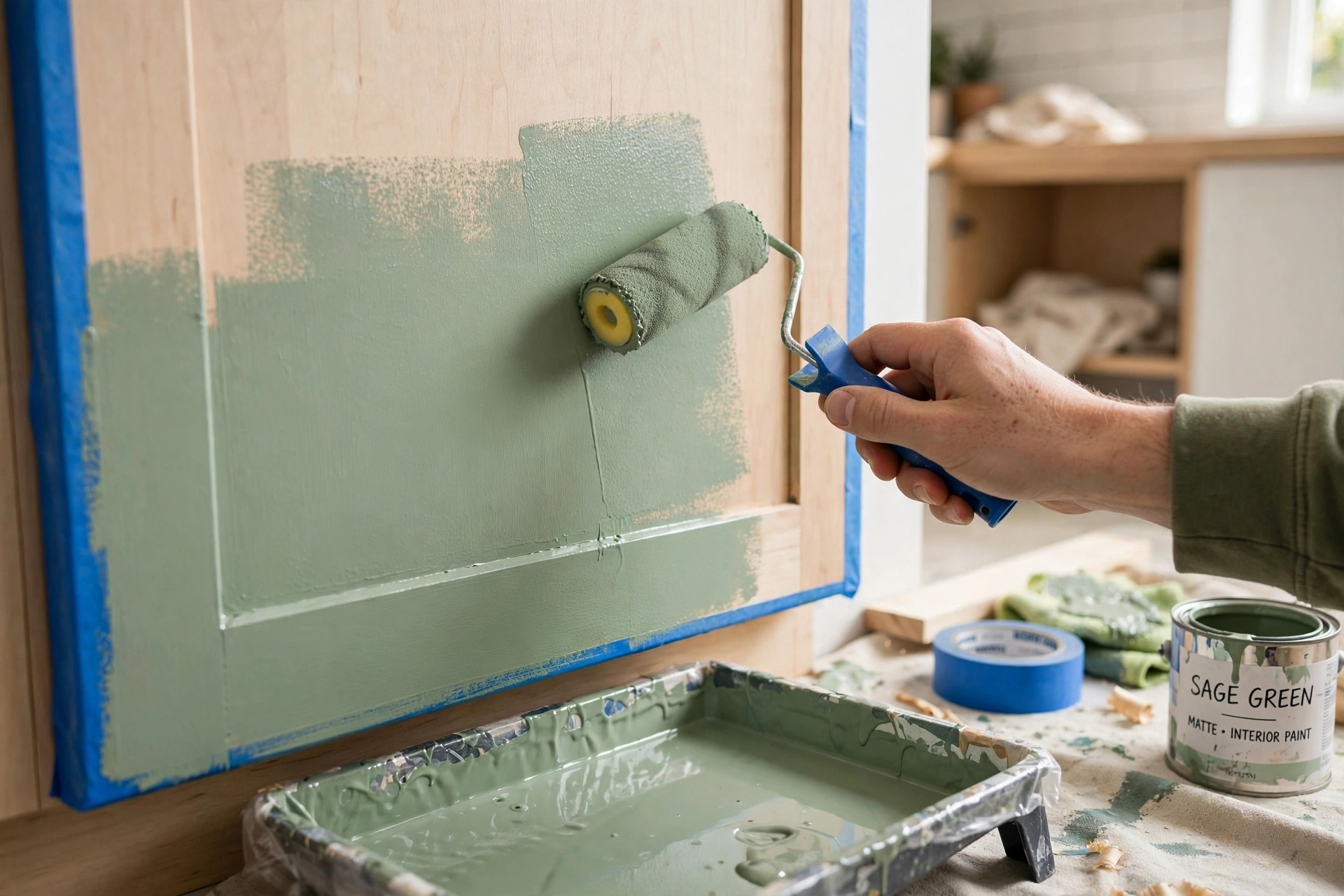
- Paint the first coat. Use a small foam roller for flat areas and a good brush for edges and details. A 4 inch mini roller gives a smooth finish on flat doors. Apply a thin coat.
- Sand lightly between coats. Once the first coat is dry, sand very lightly with 240 grit paper, then wipe clean. This is the step that separates a good finish from a great one.
- Paint the second coat. Apply the second coat the same way as the first. Two thin coats are enough for most colours. A very dark colour over a pale door may need a third coat.
- Let it cure. Paint feels dry in a few hours, but it takes much longer to harden fully. Leave the doors flat for at least 24 hours, then refit them gently and treat them gently for two weeks.
- Refit and adjust. Refit the doors in their numbered places, refit the handles, and adjust the hinges so the gaps are even.
Paint the frames and carcasses while the doors are drying, using the same method. Mask the worktops and floor first.
Melamine and Gloss Doors: What Changes
Melamine and high gloss doors are the hardest surfaces to paint, because paint has nothing to grip, so the prep matters even more. Degrease thoroughly, sand with 120 grit paper until the shine is gone, and use a shellac based primer such as Zinsser B-I-N. Do not skip the primer on these doors.
Vinyl wrapped doors need a different check first. If the vinyl is peeling at the edges, paint will not fix it: peel it back, trim it neatly, and fill the edge before priming. If the vinyl is lifting across the whole door, the door needs replacing, not painting. Oak and pine doors are the easiest to paint: sand lightly, prime to block tannin stains, and paint as normal.
How Much Does It Cost to Paint Kitchen Cupboards in the UK
An average UK kitchen has around 12 to 16 doors and drawer fronts. Two 750ml tins of Frenchic Al Fresco cover that size of kitchen with two coats, since each tin covers up to 12.5 square metres per coat. Prices checked on 16 November 2026.
| Item | Price | Source |
|---|---|---|
| Frenchic Al Fresco 750ml, 2 tins | £47.00 | frenchicpaint.co.uk, £23.50 per tin |
| Zinsser B-I-N primer 500ml | £10.80 | ITS, its.co.uk |
| Harris mini roller set 4in | £6.49 | Robert Dyas |
| Total, chalk paint route | About £64.30 | Before brushes, tape and sugar soap |
The premium route costs a little more. A 2.5 litre tin of Farrow and Ball Estate Eggshell costs around £62 at Placepaints, which covers an average kitchen with two coats. Add the same primer at £10.80 and the same roller set at £6.49, and the total is about £79.30.
Two Tone Cupboards: Rules That Work
Two tone kitchens look intentional when you follow a simple rule: dark below, light above. Paint the base units a deep colour such as navy, deep green or charcoal, and keep the wall units in a warm white or pale sage.
Use the same colour family for both tones. Sage above and deep green below works, as does navy below and warm white above.
An island is the easiest place to try a second colour. Paint the island in a bold shade and keep the rest of the kitchen in one calm colour.
How Long Painted Cupboards Last and How to Clean Them
Painted cupboards last five to ten years when the prep is done properly. Eggshell and satin finishes last longest. The doors that fail first are always the ones near the hob and the sink.
Clean painted cupboards with a soft cloth and warm soapy water. Wipe up splashes and grease as soon as you see them. Never use abrasive cleaners or bleach on painted doors, and avoid steam cleaners. Keep a small pot of the same paint for touch ups.
Mistakes That Ruin Painted Cupboards
Skipping the degrease is the most common mistake: paint will not stick to grease, and it will peel in sheets within weeks. Sanding too little is the second most common mistake.
Painting too thick is another classic error. Thick coats drip, sag and take days to dry, and they peel more easily than thin ones. Two thin coats always beat one thick coat. Paint needs at least 10 degrees and good airflow to dry properly.
Refitting the doors too soon is the mistake that hurts most, because the paint looks perfect until a door sticks to its frame and peels. Leave the doors for a full day before refitting.
Frequently Asked Questions
What is the best colour for kitchen cupboards in the UK?
Sage green, deep navy and warm white are the most popular choices for UK kitchens. Sage suits most light conditions, navy adds drama, and warm white keeps small and north facing kitchens bright.
What is the best paint for kitchen cupboards?
Eggshell or satin paint made for woodwork is the best choice, since both are tough and washable. Farrow and Ball Estate Eggshell costs around £62 for 2.5 litres. Frenchic Al Fresco chalk paint at £23.50 for 750ml is the easiest option for a first timer.
Do I need to prime kitchen cupboards before painting?
Yes, prime bare wood, melamine and gloss doors before painting. A shellac based primer such as Zinsser B-I-N sticks to smooth surfaces and blocks stains. Chalk paint is the exception, since it is self priming on most surfaces.
How much does it cost to paint kitchen cupboards in the UK?
An average UK kitchen costs about £65 to £80 in paint and tools. Two 750ml tins of Frenchic Al Fresco cost £47, a 500ml tin of Zinsser B-I-N primer costs £10.80, and a mini roller set costs £6.49.
How long do painted kitchen cupboards last?
Painted cupboards last five to ten years when the prep is done properly. Eggshell and satin finishes last longest. Clean them with a soft cloth and warm soapy water.