Cream Kitchen Cabinets With Black Hardware Ideas That Feel Warm, Not Flat
Cream kitchen cabinets with black hardware ideas work best when the cream has a warm undertone and the black stays matte. Pick a tested cream such as Benjamin Moore White Dove OC-17 or Sherwin-Williams Creamy SW 7012, size the pulls to the drawer, and repeat the black on the faucet and lights.
Cream and black is the quietest bold pairing in kitchen design. The formula stays the same: one warm cream, one matte black, one pale stone, warm wood.
The catch is that cream punishes guesswork. The wrong cream turns yellow, the wrong black turns harsh, and small hardware disappears against a pale door.
Start With the Cream Rule
Cream needs black to read as a design choice rather than a faded white. The black hardware stops a pale kitchen from feeling flat, so repeat the black at least three times.
1. Cream shaker cabinets with matte black cup pulls
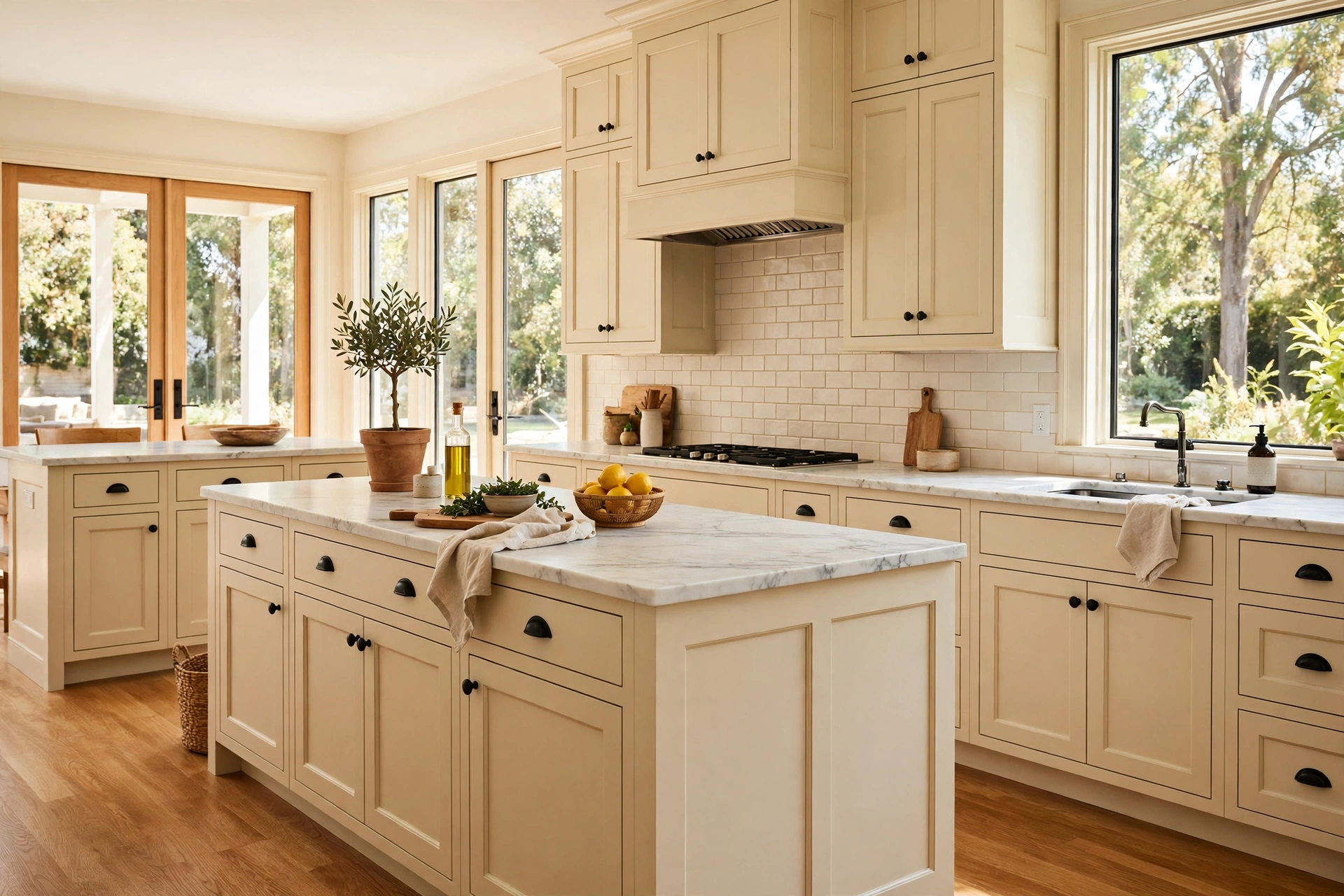
This is the pairing most people picture. Cream shaker doors set the tone, and matte black cup pulls and knobs give the whole run definition. That contrast is what makes shaker style pop instead of blending into the walls. Mix round knobs on the uppers with cup pulls on the drawers.
2. Cream island with black hardware and wood top
If painting every cabinet feels like too much, paint only the island cream with a wood top. The island becomes the focal point, and the black hardware reads as a deliberate accent. A butcher block top warms the cream.
3. All cream cabinets with a black faucet and black lights
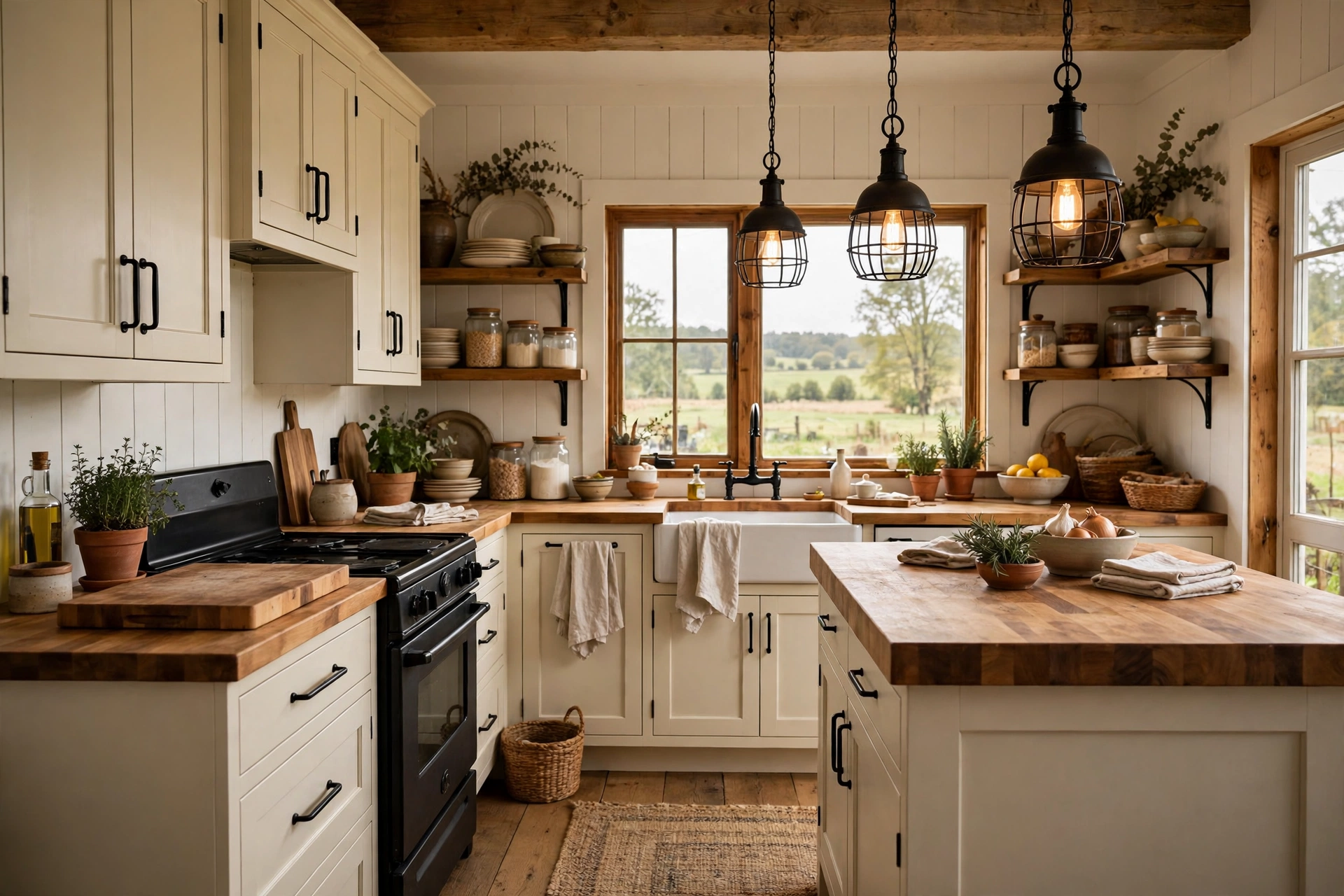
An all cream kitchen works when the black repeats: matte black pulls, a matte black faucet, and black iron pendants over the island. Without those three repeats, the cream reads as unfinished.
Cream vs White vs Antique White
Rivals conflate white and cream, and that is the biggest gap on page 1. Cream has a warm yellow or beige undertone, white has almost none, and antique white sits between them. Pick the wrong one and the room fights itself.
| Cream paint | Code | Undertone | Pairs with |
|---|---|---|---|
| Benjamin Moore White Dove | OC-17 | Warm gray | Marble, oak, black |
| Sherwin-Williams Creamy | SW 7012 | Yellow | Butcher block, brass |
| Sherwin-Williams Alabaster | SW 7008 | Warm neutral | Any countertop |
| Benjamin Moore Cloud White | OC-130 | Soft warm | Walnut, black |
| Behr Swiss Coffee | 12 | Warm beige | Walnut, black |
Benjamin Moore White Dove OC-17 is the safest all round choice, because its light value of 85 keeps it bright and its warm gray undertone never turns yellow. Sherwin-Williams Creamy SW 7012 is the warmest cream here, so use it in rooms with cool light and pair it with wood. Sherwin-Williams Alabaster SW 7008 is the most neutral cream, with a light value of 82. Always paint a large test patch and check it in morning light and under your evening bulbs.
Black Hardware Finishes Compared
Black is not one finish either. Matte black, flat black, and oil rubbed bronze each read differently against cream, so match the finish to the kitchen style, then keep it consistent.
4. Matte black for modern farmhouse kitchens
Matte black is the most popular black on cream, because its flat, soft surface reads as modern without feeling industrial. It suits shaker doors, marble counters, and oak floors. If you can only pick one finish, pick matte black.
5. Flat black for a softer, quieter edge
Flat black is a touch softer than matte black, with almost no sheen. It suits traditional cream kitchens, cup pulls, and a farmhouse sink, because it reads as cast iron. It suits rooms with strong sun, where a shinier black would flash.
6. Oil rubbed bronze for traditional kitchens
Oil rubbed bronze is a near black brown with warm copper hints. It suits traditional cream kitchens, beadboard, and a bridge faucet, because its warmth ties the cream and the wood together. New marks blend into the rubbed finish.
Hardware Size Chart
Rivals show hardware but never say what size to buy. Measure the drawer front first, then pick the pull from this chart. Center to center means the distance between the two screw holes.
| Drawer or door width | Pull size, center to center | Best shape |
|---|---|---|
| Under 12 inches | 3 inches, or a knob | Knob or small cup pull |
| 12 to 18 inches | 3-3/4 inches | Bar pull or cup pull |
| 18 to 24 inches | 5-1/16 inches | Bar pull |
| 24 to 30 inches | 6-5/16 inches | Bar pull |
| Over 30 inches | 8-13/16 inches or two pulls | Long bar pull |
A pull should span about one third of the drawer width, never less than a quarter. Keep every pull the same length on every drawer of the same width.
The Small Kitchen Version
A small kitchen does not need fewer colors, it needs the color in the right places. Cream keeps the room bright, black gives it definition.
7. Galley kitchen, cream both walls, black hardware
In a galley, cream cabinets on both walls keep the corridor bright, and the black hardware gives the long run its rhythm. A jute runner on the wood floor softens all that cream. Matching cabinet fronts on both sides makes the whole run feel intentional.
8. Small kitchen, cream cabinets, black framed window
A black framed window is the cheapest way to repeat the black in a small cream kitchen. It ties to the hardware and floods the cooking zone with light. Add a black faucet and the room has its three black repeats.
9. Cream cabinets with open wood shelves
Open wood shelves break up a cream wall without adding another color, and they give the black hardware a warm neighbor. Two reclaimed wood shelves on black brackets hold everyday dishes in plain sight. Edit the display hard, because everything up there is on show.
Countertops and Backsplashes by Cream Undertone
The countertop and the backsplash decide whether the cream reads as warm or washed out. Match them to the undertone in the table above, not to the cream name on the can.
10. White marble with warm veining
White marble with warm gold or gray veining is the easiest countertop for cream. A honed finish near the range hides water spots better than polished marble. Keep the veining loose and irregular.
11. Butcher block for a yellow cream
Butcher block is the warmest countertop for a yellow cream such as Creamy SW 7012, because its honey tone matches the yellow side. It works best on the island, where its warmth anchors the room. Oil it near the sink edge, where wood counters show wear first.
12. Cream subway tile with warm grout
Cream subway tile is the dependable backsplash for cream cabinets. Keep the grout lines narrow and warm white, so the tile reads as one continuous cream surface. Carry the tile to the ceiling line near the hood.
What a Black Hardware Swap Costs
Every price below was checked on 23 Nov 2026 from current retailer listings. Prices are per piece in US dollars, before tax. A hardware swap is the cheapest way into this look.
| Hardware | Price each | Best for |
|---|---|---|
| Amerock Current pull, matte black | $4.85 | Budget doors and drawers |
| Amerock Lintel 3 inch, matte black | $12.74 | Small drawers |
| Amerock Everett 3-3/4 inch, matte black | $15.65 | Standard drawers |
| Amerock Everett 5-1/16 inch, matte black | $17.89 | Wide drawers |
| Amerock Ballard pull, matte black | $18.99 | Doors and drawers |
| Benjamin Moore Advance, per gallon | $62.44 | Cabinet paint |
| Sherwin-Williams Emerald Urethane, per gallon | $95 to $110 street | Cabinet paint |
| Behr Premium Plus, per gallon | $40.98 | Budget cabinet paint |
A typical kitchen has about 20 doors and drawers. A budget swap with Amerock Current pulls costs about $97. A midrange swap with Amerock Everett pulls costs about $313 to $358. A premium swap with Amerock Ballard pulls costs about $380. A matte black faucet usually costs more than all the pulls combined, so pick it first.
If you repaint the cabinets cream as well, allow two gallons of enamel. A budget route with Behr Premium Plus costs about $82, a midrange route with Benjamin Moore Advance costs about $125, and a premium route with Sherwin-Williams Emerald Urethane costs about $190 to $220.
For a second pairing in the same color family, see our guide to navy blue and brass kitchen ideas. For the wider budget picture, our sage green and cream kitchen color ideas guide breaks down a full paint only refresh.
Keep the Black From Looking Harsh
Black on cream can turn harsh when it repeats too loudly. These four habits keep the contrast soft.
13. Repeat the black three times, no more
Three black repeats is the sweet spot: hardware, faucet, and one light fixture. A fourth repeat, such as black appliances, tips the room from defined into graphic.
14. Warm the black with wood
Wood is what stops black on cream from feeling cold. A butcher block counter, an oak floor, or open wood shelves all warm the black by association. Without wood, the black reads as ink on paper.
15. Use matte, never polished, black
Polished black hardware shines, and shine on a pale cream door draws the eye to every fingerprint. Matte black absorbs light instead, so it reads as a quiet line. It also hides fingerprints, which matters on the pulls you grab every day.
16. Let the cream carry the walls
Keep the walls cream, not white, so the cabinets and the walls read as one warm envelope. A stark white wall next to a warm cream cabinet makes the cream look dirty. Paint the walls the same cream, one shade lighter.
Finishing Touches
The last three ideas are small and cheap, and they do more than any single big purchase.
17. Checkerboard floor for a graphic base
A black and cream checkerboard floor grounds all that pale cabinetry with a graphic punch. It is a classic farmhouse move. Choose a matte tile finish rather than glossy, because it hides scuffs.
18. Glass front doors to break up the cream
Glass front doors turn cream cabinets into a display case. Stacks of white plates and jugs sit in full view, so the storage itself becomes part of the room. Keep the dishware to white and cream.
19. Greenery and linen to soften the contrast
A bowl of lemons, potted herbs on the sill, and a linen towel over the oven handle soften the black and cream contrast. Fresh greenery is the cheapest styling move in this guide, and it makes the scheme feel lived in.
Mistakes to Avoid
The most common mistake is picking a cream with a pink undertone, because pink cream next to black hardware reads as sweet. Put every cream sample side by side first, and reject any that looks pink.
The second mistake is mixing black finishes. Matte black pulls with polished black faucets make a quiet palette look busy. Pick one black finish and use it on every knob, pull, faucet, and light fixture.
The third mistake is a stark white ceiling. A bright white ceiling over warm cream cabinets makes the cream look yellow. Paint the ceiling the same cream.
Frequently Asked Questions
What is the best cream paint color for kitchen cabinets?
Benjamin Moore White Dove OC-17 is the safest choice, because its light value of 85 keeps it bright and its warm gray undertone never turns yellow. Sherwin-Williams Creamy SW 7012 is warmer, so use it in rooms with cool light.
What is the difference between cream and white kitchen cabinets?
Cream has a warm yellow or beige undertone, white has almost none, and antique white sits between them. Cream hides everyday marks better than bright white.
What size pulls should I use on cream kitchen cabinets?
Size the pull to the drawer: 3-3/4 inches for a 12 to 18 inch drawer, 5-1/16 inches for an 18 to 24 inch drawer, and 6-5/16 inches for a 24 to 30 inch drawer. A pull should span about one third of the drawer width.
Does black hardware make a small cream kitchen look smaller?
Not if you keep the black to hardware, faucet, and one light fixture. Cream keeps the room bright, and the black gives it definition. A black countertop will shrink a small kitchen.
How much does it cost to swap kitchen hardware to matte black?
A budget swap with Amerock Current pulls at $4.85 each costs about $97 for a typical kitchen. A midrange swap with Amerock Everett pulls costs about $313 to $358. A premium swap with Amerock Ballard pulls costs about $380.