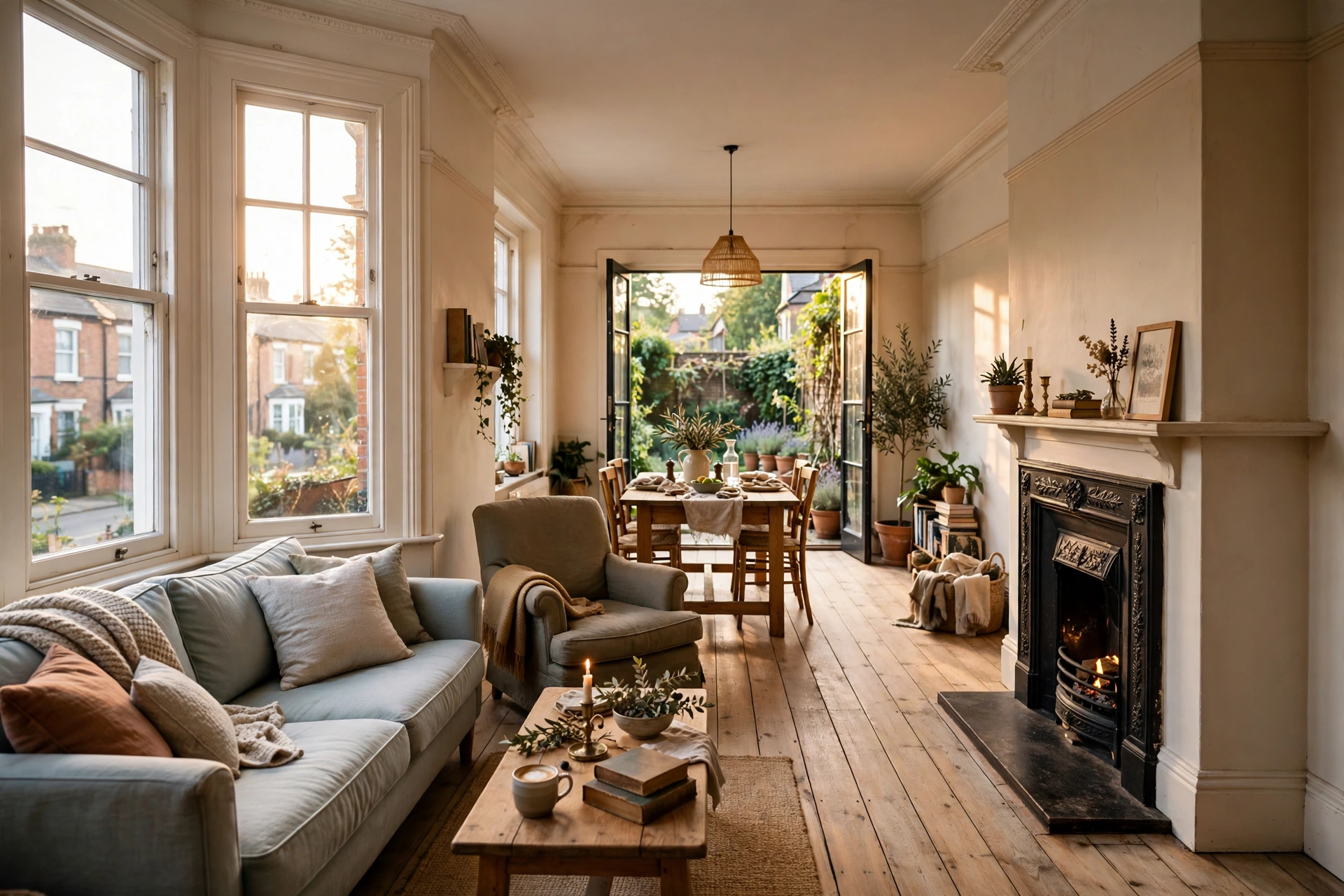

Warm Bedroom Colors That Help You Sleep Better
Warm bedroom colors for cozy sleep are soft earthy shades like warm white, beige, greige and muted terracotta that lower visual stimulation and help your body wind down. Keep the room at 60 to 67 degrees Fahrenheit and use warm light at 2700K to 3000K so the color feels calm at night.
Color changes how a bedroom feels at 10 at night, and that feeling matters for sleep. A cool bright white can look clean in daylight and feel stark after dark, while a warm shade softens edges and makes lamps glow instead of glare.
This guide is color first. It names 12 real paint shades with manufacturer LRV values, shows which direction each shade suits best, explains undertones in plain words, and gives renter friendly ways to get the same warmth without paint.
Why Warm Colors Help You Sleep
Your brain reads color as a signal. Bright cool colors feel alert and active, while soft warm colors feel settled and safe. Warm muted walls reduce contrast in the room, so your eyes relax when you look around before bed.
Light temperature matters as much as wall color. Warm light at 2700K to 3000K looks amber and gentle, close to lamplight and sunset. Cool daylight bulbs make even a warm wall look flat and gray, so change the bulbs before you blame the paint.
Room temperature is the other half of the sleep setup. Sleep guidance puts the ideal bedroom at 60 to 67 degrees Fahrenheit, with humidity at 30 to 50 percent. A warm color cannot fix a hot stuffy room, but it can make a cool room feel inviting instead of chilly.
The 12 Warm Bedroom Colors That Work Best
The table below lists 10 named shades with verified manufacturer LRV values, plus two accent families for a feature wall. LRV means light reflectance value, from 0 for black to 100 for pure white. For a bedroom, the sweet spot for all four walls is usually LRV 55 to 85, while LRV 20 to 45 suits one accent wall.
| Shade | Brand and code | LRV | Best room direction |
|---|---|---|---|
| White Dove | Benjamin Moore OC-17 | 85 | South or west |
| Alabaster | Sherwin-Williams SW 7008 | 82 | North or east |
| Seapearl | Benjamin Moore OC-19 | 77.9 | North or east |
| Classic Gray | Benjamin Moore OC-23 | 73.7 | North or south |
| Pale Oak | Benjamin Moore OC-20 | 68.6 | North or south |
| Manchester Tan | Benjamin Moore HC-81 | 63.2 | South or west |
| Edgecomb Gray | Benjamin Moore HC-173 | 63 | North or east |
| Agreeable Gray | Sherwin-Williams SW 7029 | 60 | East or west |
| Accessible Beige | Sherwin-Williams SW 7036 | 58 | North or south |
| Revere Pewter | Benjamin Moore HC-172 | 55 | East or south |
| Terracotta accent | Clay or muted rust | 20 to 35 | South or west wall |
| Warm taupe brown | Taupe and warm brown | 25 to 45 | North or east wall |
Start with the lightest shades if your bedroom is small or dark. White Dove at LRV 85 and Alabaster at LRV 82 keep the room bright while still feeling warm, especially with cream bedding and wooden furniture.
Move to the middle of the table for a clear cozy feel. Pale Oak at LRV 68.6, Manchester Tan at LRV 63.2 and Edgecomb Gray at LRV 63 add visible warmth without closing the room in. Agreeable Gray at LRV 60 and Accessible Beige at LRV 58 sit between gray and beige and look good in morning and evening light.
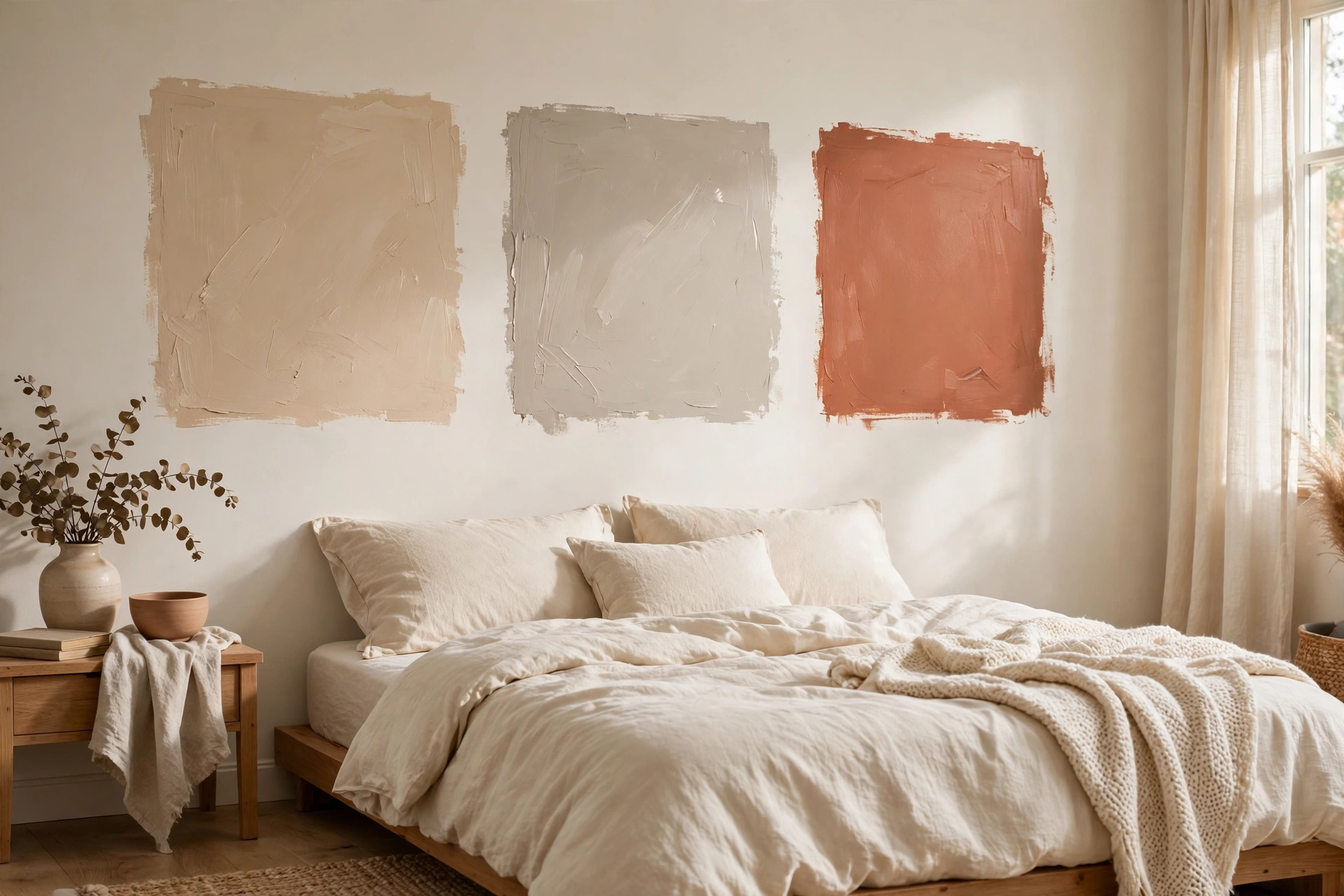
Use the deepest shades on one wall only. Revere Pewter at LRV 55 can work on all four walls in a large bright bedroom, but in a small room it is better behind the bed. Terracotta at LRV 20 to 35 and warm taupe brown at LRV 25 to 45 are accent wall colors that anchor the room while the other walls stay light.
Pick Your Shade by Room Direction
Room direction changes how a paint color looks, because the light through the window changes through the day. A shade that looks creamy in a south facing room can look gray in a north facing room.
North facing bedrooms get cool indirect light all day, so warm shades help most here. Pick Alabaster, Seapearl, Pale Oak, Accessible Beige or Edgecomb Gray, and avoid cool grays and bright whites, which can look icy in north light.
South facing bedrooms get strong warm light for most of the day, so almost every warm shade works here, but strong sun can wash a pale color out by midday. White Dove and Manchester Tan hold up well in south light. If the room feels too bright at night, go one step deeper than you first planned.
East facing bedrooms get bright morning light and softer light later, so they suit balanced shades like Agreeable Gray, Classic Gray and Revere Pewter. West facing bedrooms get warm afternoon and evening light, which flatters warm shades and deepens terracotta and rust accents, making them the best direction for a bold accent wall.
Before you buy a gallon, paint a large sample on the wall you will see from the bed. Look at it in morning light, in evening light and under your bedside lamp. One gallon covers 350 to 400 square feet per coat, so a sample pot is a small cost against repainting a whole room. For a cost sense first, read what painting a 12×12 bedroom costs.
Undertones: The Detail That Decides Everything
Undertone is the quiet color hiding inside a neutral paint. A beige can lean yellow, pink, red or green. You may not notice it on the swatch, but you will notice it on four walls under your lamps.
White Dove has a yellow undertone, which is why it feels creamy rather than stark. Manchester Tan has a red undertone, which gives it a soft rosy warmth. Accessible Beige has a subtle red undertone too, while Revere Pewter has a green undertone that keeps it calm and earthy, and Seapearl has a gray undertone that feels soft and quiet.
To check an undertone, hold the swatch next to a pure white card in daylight, then next to your bedding and wood furniture. Match the undertone to the biggest items in the room, not the smallest. Use a warm white trim with warm walls, for example White Dove trim with Pale Oak or Accessible Beige walls.
Accent Walls That Add Coziness Without Darkening the Room
An accent wall is the easiest way to get a deep cozy color without painting the whole room dark. Paint the wall behind the bed in terracotta, muted rust or warm taupe brown, and keep the other three walls light.
Terracotta and rust shades sit at LRV 20 to 35, deep enough to feel warm and grounded. They work best in south or west facing rooms, where warm light brings out the clay tone. In a north facing room, pair them with very light bedding so the room does not feel heavy.
Warm taupe and brown shades sit at LRV 25 to 45. They are quieter than terracotta and suit bedrooms that need calm more than drama. Use them behind the bed with wooden furniture and linen bedding. Keep the ceiling warm white, because a dark ceiling in a standard bedroom lowers the room visually.
Renter Friendly Ways to Get Warmth Without Paint
Renters can get the same cozy effect without touching the walls. Layer warm color in large soft surfaces, so the eye reads warmth even when the walls stay white. Start with bedding, because it covers the largest area after the walls.
Choose cream, oatmeal, warm beige or muted terracotta bedding instead of bright white or cool gray. Add a throw in a deeper rust or warm brown across the foot of the bed, and layer two pillows in a warm tone against neutral sleeping pillows.
Curtains are the next big surface. Floor length curtains in warm linen, soft beige or muted clay change the whole room, especially in the evening when they catch lamplight. A large rug in a warm tone does the same for the floor.
Peel and stick wallpaper on one wall is another renter option where the lease allows it. Choose a warm subtle pattern in terracotta and cream, and keep it to the wall behind the bed. If wallpaper is not allowed, a tall upholstered headboard in warm beige gives a similar soft backdrop.
Lighting does the rest. Swap cool bulbs for warm bulbs at 2700K to 3000K, add a bedside lamp with a fabric shade, and use a low warm glow in the last hour before bed. For warm paint color ideas elsewhere in the home, see warm paint color ideas for the kitchen and carry the same undertone through the house.
Bedding, Lighting and Texture That Complete the Look
Paint sets the tone, but bedding and light decide whether the room feels cozy or just colored. Cream bedding works with every shade in the table. Oatmeal and warm beige bedding suit Pale Oak, Accessible Beige and Agreeable Gray, while terracotta bedding suits White Dove, Alabaster and Classic Gray walls.
Mix textures on purpose. A smooth cotton duvet, a linen throw, a wool cushion and a wooden tray give the eye different surfaces to rest on. Avoid too much shine: satin, glass and chrome bounce light and can make a warm room feel cold.
Keep bedside lighting low and warm. A lamp at 2700K to 3000K with a fabric shade spreads a soft pool of light instead of a harsh spot, and a small warm reading light is better than a ceiling light in the evening. Keep clutter low too, because a tidy warm room helps your brain switch off.
Mistakes to Avoid With Warm Bedroom Colors
Do not go too dark on all four walls. A deep terracotta or dark brown can look beautiful in a photo and feel heavy in a small bedroom at night. Use deep shades on one wall and let bedding and light add the rest of the warmth.
Do not ignore the undertone. A beige with a pink undertone next to orange wood can clash, and a gray with a green undertone next to pink bedding can look muddy. Test the undertone against your real furniture and bedding.
Do not use cool light with warm paint. Cool bulbs undo warm walls in one switch, so check every bulb in the room and replace them all with warm bulbs at 2700K to 3000K.
Do not match everything exactly. A room where the walls, bedding, curtains and rug are all the same beige looks flat and dull. Vary the depth with light walls, mid tone bedding and one deeper accent in a throw or cushion.
Sources checked 20 Nov 2026: Chairish, Build-Construct, HomeOration and Home Sentiment.
Frequently Asked Questions
What is the warmest bedroom color for sleep?
Soft warm white and light warm beige are the warmest safe picks for sleep, because they calm the room without darkening it. White Dove at LRV 85 and Alabaster at LRV 82 are good starting points, with cream bedding and warm light at 2700K to 3000K.
What LRV is best for a cozy bedroom?
For all four walls, LRV 55 to 85 works best in most bedrooms. Pale Oak at LRV 68.6, Agreeable Gray at LRV 60 and Accessible Beige at LRV 58 sit in that cozy middle range. Save LRV 20 to 45 shades like terracotta for one accent wall.
What color bedroom helps you sleep best?
Muted warm colors help most people sleep best, because they lower visual stimulation and feel settled at night. Warm white, soft beige, pale greige and muted terracotta all work with a cool room at 60 to 67 degrees Fahrenheit and warm dim light in the evening.
Can renters make a bedroom feel warm without painting?
Yes. Use cream or warm beige bedding, a terracotta or rust throw, floor length warm curtains and a large warm rug to layer color over white walls. Add warm bulbs at 2700K to 3000K and a fabric shaded lamp.
Should a north facing bedroom use warm or cool paint?
A north facing bedroom should use warm paint, because its light is cool and indirect all day. Choose shades with a yellow or red undertone, like Alabaster, Seapearl, Pale Oak or Accessible Beige, and test the shade under your bedside lamp at night.